

ANCIENT & MYTHOLOGY
PARS RECORDS Ⓜ️all
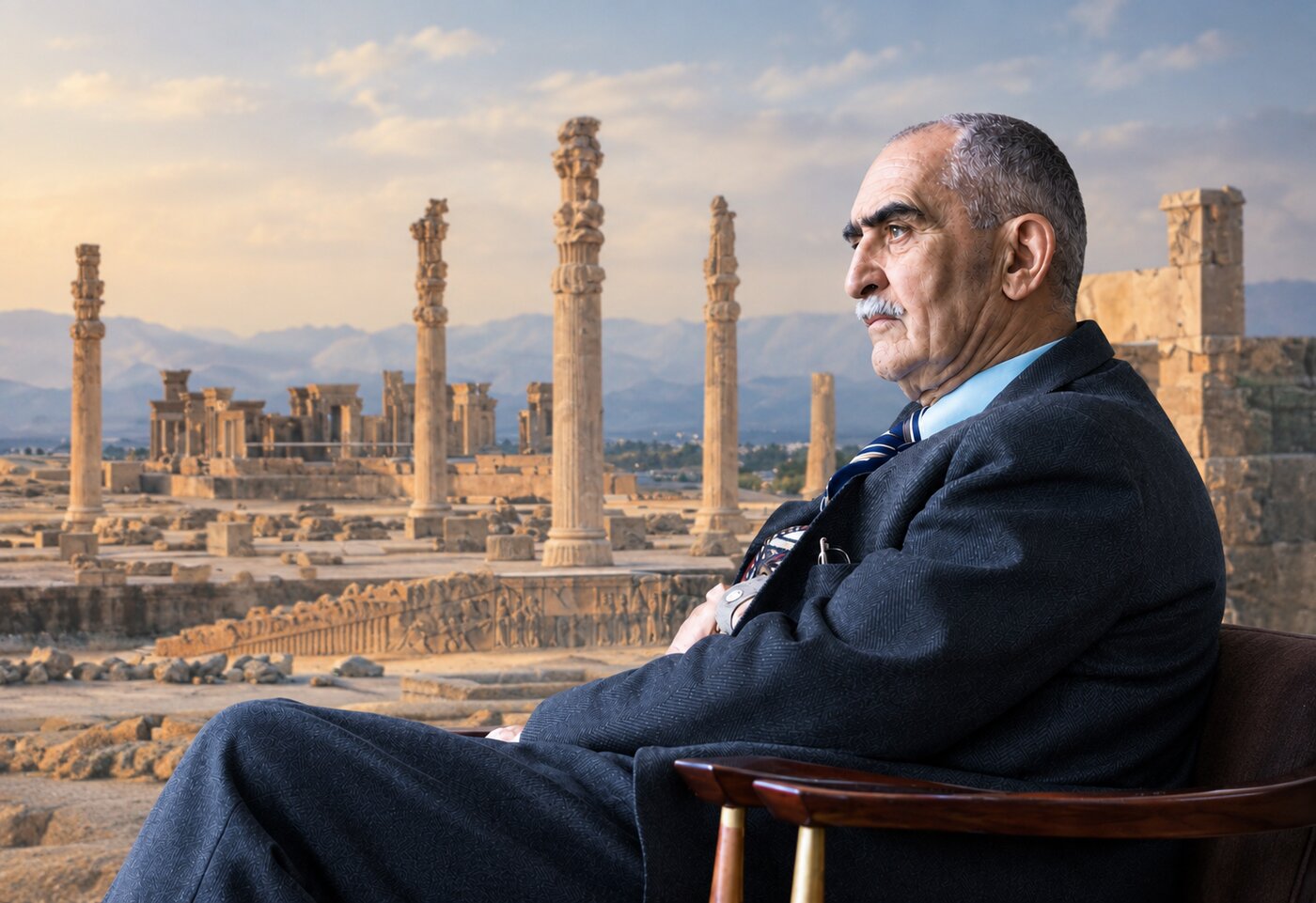

The Vigilant Guardian of the House of Iran
October 8 marks the birth anniversary of Iraj Afshar, a man who acted not merely as an eminent intellectual, but as a cultural institution in his own right. Indeed, it can be said that contemporary Iranian culture owes much of its discipline, vitality, and endurance to him.
Iraj Afshar was born on October 8, 1925 (16 Mehr 1304), into a distinguished and cultured family in Tehran. His father, Mahmoud Afshar Yazdi, was the founder of the enduring journal Ayandeh (The Future). This family environment meant that from his teenage years, Iraj grew up surrounded by books and periodicals. Although he studied law at the University of Tehran and received a bachelor's degree in judicial studies, his boundless love for Iran led him down a different path—a path along which nearly 65 years of tireless activity resulted in the authorship, editing, and compilation of more than 300 books and 3,000 valuable articles.
Afshar’s professional and administrative career is a record of firsts and lasting achievements. He was the founder and head of the Central Library and Documentation Center of the University of Tehran, and through his efforts transformed the institution into one of the country’s richest research repositories. He also served briefly as director of the National Library of Iran, and during that short period established an Iranology Center within the institution. The establishment of publications such as Farhang-e Iran-Zamin (The Culture of Iran)—in collaboration with Mamad-Taqi Danesh-Pazhuh, Sotoudeh, Mogharrabi, and Zaryab Khu’i—and his editorial work for respected journals such as Rahnamā-ye Ketāb (Book Guide) and Sokhan formed another part of his efforts to create a worthy platform for publishing the research of scholars.
But Afshar was not merely a desk-bound scholar confined to libraries. He connected historical texts and manuscripts with the realities of the land itself. He traversed Iran’s mountains, deserts, and dirt roads, photographing and documenting a mud-brick structure, an inscription, or an isolated manuscript. It was this passion for travel and recording details that produced enduring works such as Golgasht dar Vatan (Strolling in the Homeland). Through these journeys, he strengthened his cultural connection with even the most remote villages of Jiroft and the mountain foothills, as well as cities such as Borujen and Zavareh.
The great figures of Iran’s culture and literature have each viewed the magnitude of his personality from a different perspective. Dr. Mohammad-Reza Shafiei Kadkani said of him: “I can say with confidence that, in the cultural sphere, Iraj Afshar was unique. If we were to choose one person with comprehensive knowledge of our national culture and the historical geography of our contemporary era, the first would be Iraj Afshar. What a great man he was, and alas, even fifty outstanding figures could not fill the void left by that singular man.”
Ali Dehbashi, editor of Bukhara magazine, described Afshar’s humility and selfless devotion in these words: “Professor Afshar worked without expecting anything in return and solely out of love for Iran and the Persian language; it was as though it had been written into his very nature that he must work for Iran. A century must pass before another Iraj Afshar emerges.”
Dr. Mehdi Nourian, referring to Afshar’s founding of the “Congress of Iranian Research,” likewise regarded him as a steadfast pillar of scholarship. He emphasized that Afshar created the conditions for introducing prominent Iranian and foreign Iranologists and demonstrated that love for Iran acquires meaning only through a profound knowledge of its history and literature.
Ultimately, this soul devoted and passionately committed to Iran passed away on March 9, 2011 (18 Esfand 1389), following a period of illness. Yet the legacy he left behind continues to illuminate the path for scholars and researchers of Iran.
 |
 |
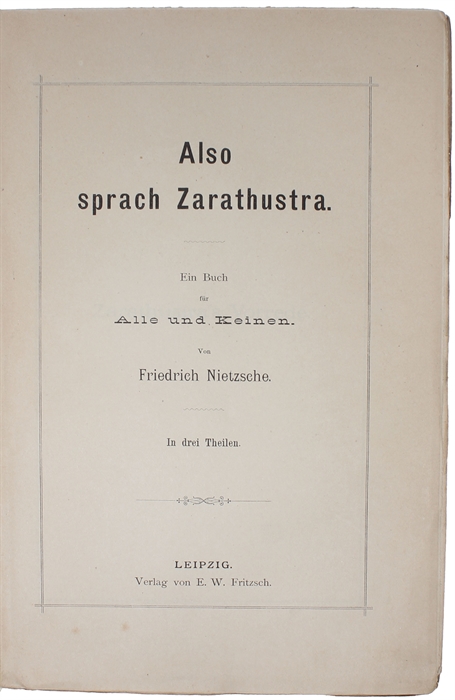
The Übermensch (/ˈuːbərmɛnʃ/ OO-bər-mensh, German: [ˈyːbɐmɛnʃ]; lit. 'Superman' or 'Beyond-Man') is a concept in the philosophy of Friedrich Nietzsche. In his 1883 book, Thus Spoke Zarathustra (German: Also sprach Zarathustra), Nietzsche has his character Zarathustra posit the Übermensch as a goal for humanity to set for itself. The Übermensch represents a shift from otherworldly Christian values and manifests the grounded human ideal. Zarathustra proclaims the will of the Übermensch to give meaning to life on planet Earth, and admonishes his audience to ignore those who promise other-worldly fulfillment.
 |
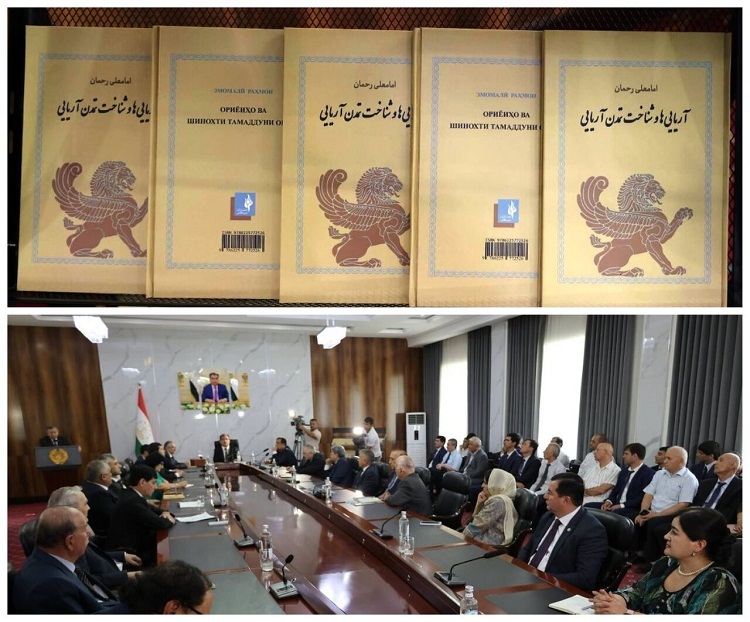 |
The Aryans & Understanding Aryan Civilization authored by Emomali Rahman President has been published and unveiled in Tajikistan using the ancestral script (Persian). The work focuses on Aryan history and civilization, cultural heritage, the origins of writing and written records, and the role of knowledge and culture in Aryan statecraft, while also addressing topics related to identity, culture, and civilizational heritage.
№4
 |
 |
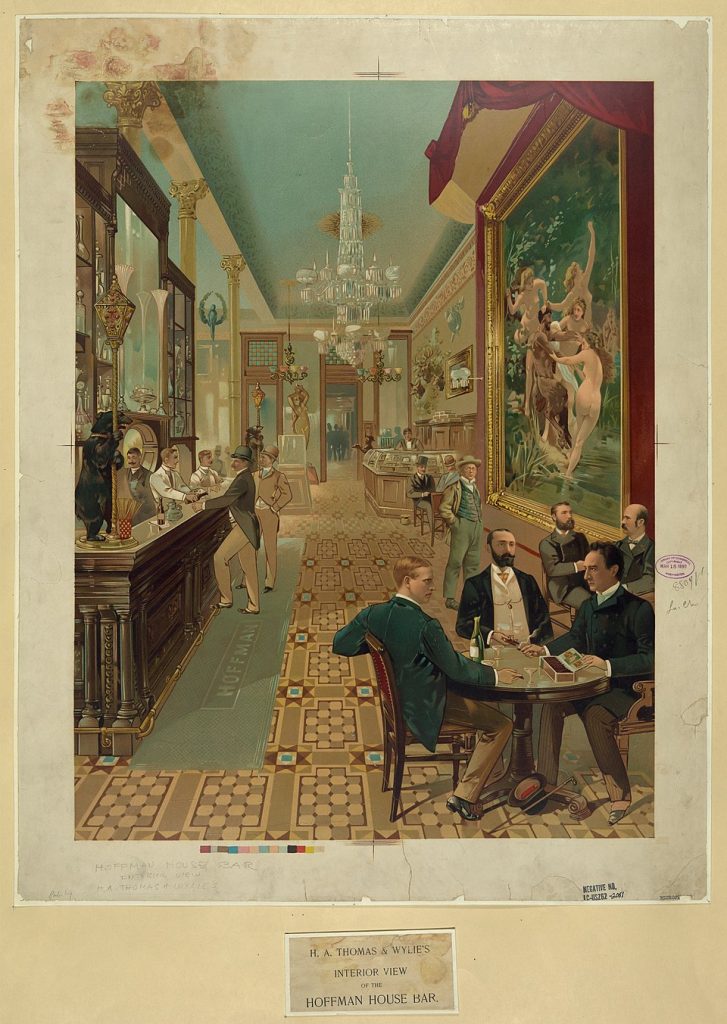
Innenansicht der Bar im Hoffman House Hotel in New York (1890), rechts das Gemälde Nymphen und Satyr und im Hintergrund das Tabakgeschäft